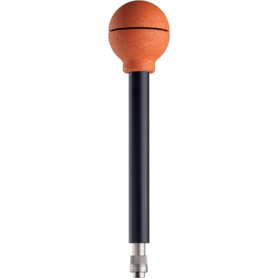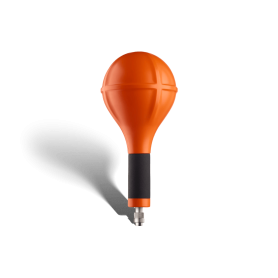
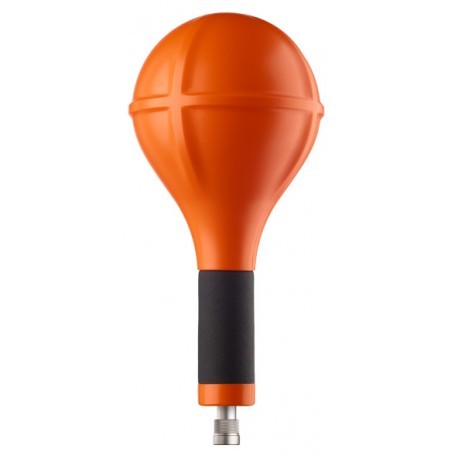

Electric and magnetic field probe - 10 Hz to 3 kHz, weighted response: WP50 | Wavecontrol

Isotropic electric and magnetic field probe for 10 Hz to 3 kHz EMF measurements, with True RMS response, weighted and flat modes, 100 cm² sensor area and ISO 17025 accredited calibration.
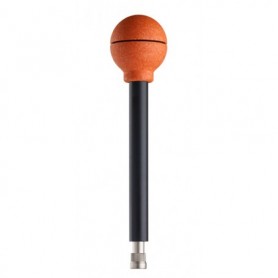
The WP50 is an isotropic probe designed for combined electric and magnetic field measurement from 10 Hz to 3 kHz. It supports True RMS measurement and can be used in both weighted mode and flat response mode, depending on the selected measurement requirement.
The probe is intended for low-frequency electromagnetic field assessment in power grid, railway and industrial environments. It is designed for measurements in accordance with IEC 62110 and IEC 61786, with exposure evaluation based on public and occupational ICNIRP 2010 limits in weighted mode.
Benefits
- Combined E-field and H-field measurement: simultaneous assessment of electric and magnetic fields with one probe.
- Low-frequency EMF coverage: measurement range from 10 Hz to 3 kHz.
- Isotropic True RMS measurement: suitable for real field environments where direction and signal behaviour may vary.
- Weighted measurement mode: results displayed as a percentage of the selected exposure standard.
- Flat response mode: field strength displayed in engineering units such as V/m and µT.
- 100 cm² field sensor area: suitable for low-frequency exposure measurements around power grid and railway infrastructure.
- Accredited calibration: ISO 17025 accredited calibration with ILAC recognition.
Main Features
- Frequency range: 10 Hz – 3 kHz.
- Sensor type: isotropic RMS sensor with combined measurement of electric and magnetic fields.
- Frequency response modes: weighted response with results displayed in percentage of the selected standard, and flat response with results displayed in V/m, µT and related units.
- Exposure limits in weighted mode: public and occupational ICNIRP 2010.
- Standard customization: customizable to other standards.
- Weighted mode measurement range: electric field from 0.025% to 200% of limit RMS value.
- Weighted mode measurement range: magnetic field from 0.025% to 200% of limit RMS value.
- Field Strength Mode measurement range: electric field from 2.5 V/m to 20000 V/m RMS.
- Field Strength Mode measurement range: magnetic field from 0.25 µT to 2000 µT RMS.
- Dynamic range: 78 dB.
- Weighted sensitivity: 0.025% for electric and magnetic field measurement.
- Flat response sensitivity: 2.5 V/m for electric field and 0.25 µT for magnetic field.
- Frequency response: ±20% typical of standard from 25 Hz to 1 kHz, ±25% maximum.
- Linearity: ±1% typical from 1% to 100% of standard, ±2% maximum.
- Isotropic response: ±5% typical.
- Calibration: ISO 17025 accredited calibration, ILAC recognized.
- Recommended calibration period: 24 months.
- Operating temperature: -15 °C to 50 °C.
- Dimensions: 270 mm x 115 mm Ø.
- Field sensor area: 100 cm².
- Weight: 210 g.
Typical Applications
- Power grid: spot or continuous measurement of electric and magnetic fields at transformer stations and near high-voltage lines.
- Railway: measurement of electric and magnetic fields generated in trains or near railway facilities.
- Industry: measurement in manufacturing facilities with strong electromagnetic fields to support workplace safety assessments.
- Occupational exposure assessment: evaluation of low-frequency EMF exposure using weighted limits and field strength measurements.
- Technical documentation: support for standards-oriented measurement campaigns requiring traceable EMF data.
Why choose WP50
The WP50 is suited for Canadian technical teams requiring a dedicated low-frequency probe for electric and magnetic field exposure assessment from 10 Hz to 3 kHz. Its combination of weighted response, flat response and isotropic True RMS measurement makes it appropriate for power grid, railway and industrial safety applications.
With measurement capabilities aligned with IEC 62110 and IEC 61786, and weighted exposure evaluation based on ICNIRP 2010, the WP50 supports practical EMF assessment work for engineers, industrial hygienists, occupational safety teams and laboratories.
REQUEST A QUOTE
8 other products in the same category:

Personal EMF monitor - H-field from DC to 400 kHz: WaveMon LF-400
Isotropic E-field probe - 100 kHz to 6 GHz, True RMS: WPF6

Isotropic magnetic field probe - 30 MHz to 1000 MHz: WPH1000