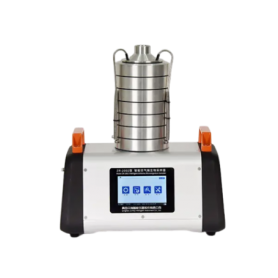
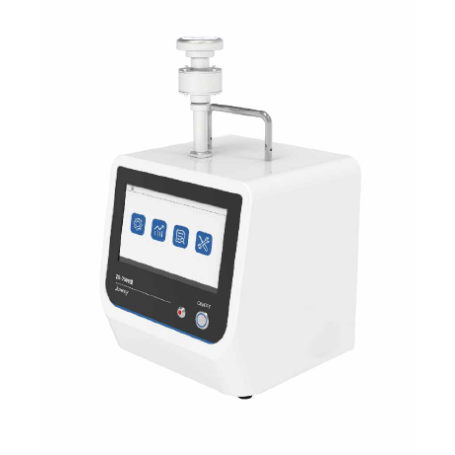

Portable Bioaerosol Monitor Real-Time Detection – ZR-7500 | JUNRAY

ZR-7500 Portable Bioaerosol Monitor: real-time detection of airborne bacteria, spores & viruses via UV-LIF. No consumables. Ideal for cleanrooms & hospitals.
The ZR-7500 Portable Bioaerosol Monitor is an advanced instrument designed for the real-time detection and monitoring of airborne biological particles. Using a combination of Mie scattering technology and ultraviolet-induced fluorescence (UV-LIF), the device detects and differentiates biological aerosols such as bacteria, spores, viruses and toxins directly in the air.
This technology enables continuous monitoring without the delays associated with traditional culture-based microbiological methods. The ZR-7500 is widely used in hospital cleanrooms, pharmaceutical production environments, public indoor spaces and controlled environments where rapid detection of airborne biological contamination is critical.
Advantages
- Real-time detection of bioaerosols without incubation delays
- No consumables required, enabling continuous unattended monitoring
- Simultaneous monitoring of aerosol and fluorescent biological particles
- Immediate alarm and trend analysis for contamination events
- Portable and compact design suitable for laboratory and field deployment
- Large touchscreen interface for visualization and analysis
Main Features
- Particle size range: 0.3 – 10 µm
- Size channels: 0.3, 0.5, 1.0, 2.0, 3.0, 5.0 and 10 µm
- Flow rate: 2.83 L/min
- Response time: < 15 seconds
- Data storage: up to 1,000,000 measurement records
- Data recording interval: 1 – 9999 seconds
- Display: 7-inch touchscreen
- Communication interfaces: USB, RS485, Bluetooth, Wi-Fi
- Battery operation: approx. 4 hours
- Weight: < 5 kg
- Operating conditions: 0 – 55 °C, ≤95% RH (non-condensing)
Typical Applications
- Cleanroom environmental monitoring in pharmaceutical and biotechnology facilities
- Hospital and healthcare environment monitoring
- Indoor biological contamination monitoring
- Public transportation and controlled public environments
- Aquaculture and environmental bioaerosol monitoring
Additional Information
- The instrument provides real-time bioaerosol monitoring, eliminating the need for traditional incubation-based microbiological methods that can take several days.
- Alarm thresholds can be configured with visual and audible alerts to notify users of abnormal biological particle levels.
- The system supports advanced data analysis, statistical modes and automated monitoring for continuous environmental control.
- Compliant with standards including ISO 14698, EN 17141:2020 and USP <1223>.
REQUEST A QUOTE
8 other products in the same category:
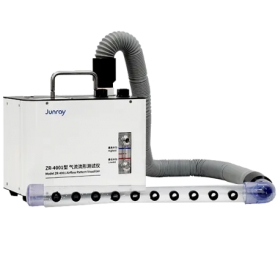
Airflow Pattern Visualizer Smoke Generator for Cleanrooms – ZR-4001
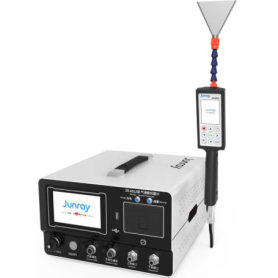
Aerosol Photometer for HEPA Filter Leak Testing – ZR-6012
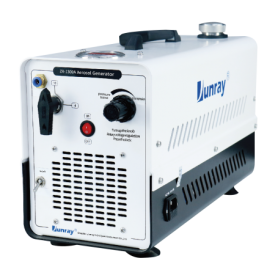
Laskin Nozzle Aerosol Generator for HEPA Filter Testing – ZR-1300A
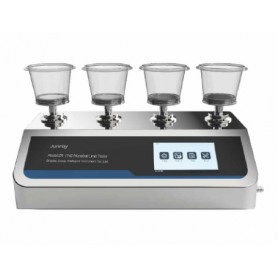
Microbial Limit Tester Membrane Filtration System – ZR-1140
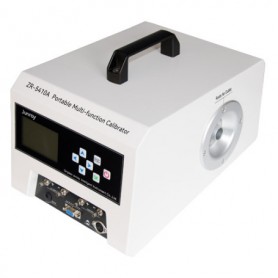
Portable Multi-Function Flow Calibrator ZR-5410A
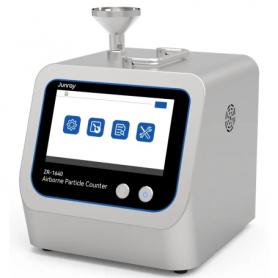
Airborne Particle Counter 100 L/min – ZR-1640 Cleanroom Monitor